Graffiti on concrete isn't just an eyesore; it's a defiant mark on your property that often leaves owners feeling helpless. Many resort to painting over it, only to find the problem resurfaces or the patch job looks worse. But what if there was a better way to tackle these unwanted tags without damaging the underlying surface? At Taginator, we understand this frustration and are here to provide a clear, effective path to restoring your concrete to its original state.
Understanding Concrete and the Challenge of Graffiti
Concrete, while durable, is also a porous material, making it particularly susceptible to graffiti. Paint, ink, and markers can seep into its microscopic pores, making superficial cleaning ineffective. This isn't like wiping a smooth, non-porous surface; you're dealing with a material that can absorb the unwanted pigment, creating a deeper, more persistent stain. That's why a general cleaning solution won't cut it, and aggressive scrubbing often just spreads the problem or damages the concrete's integrity. Effective removal requires an understanding of both the surface and the graffiti medium.
Essential Steps Before You Start
Before you grab a remover and start scrubbing, a little preparation goes a long way. First, assess the type of graffiti you're dealing with – is it spray paint, marker, or something else? This will influence the type of product you need. Next, gather your safety gear: gloves, eye protection, and proper ventilation are non-negotiable. Always perform a small patch test in an inconspicuous area to ensure the remover won't discolor or damage the concrete. This step is crucial, especially when working with various types of masonry graffiti remover products or a strong heavy duty graffiti remover.
The Removal Process: Technique and Product Application
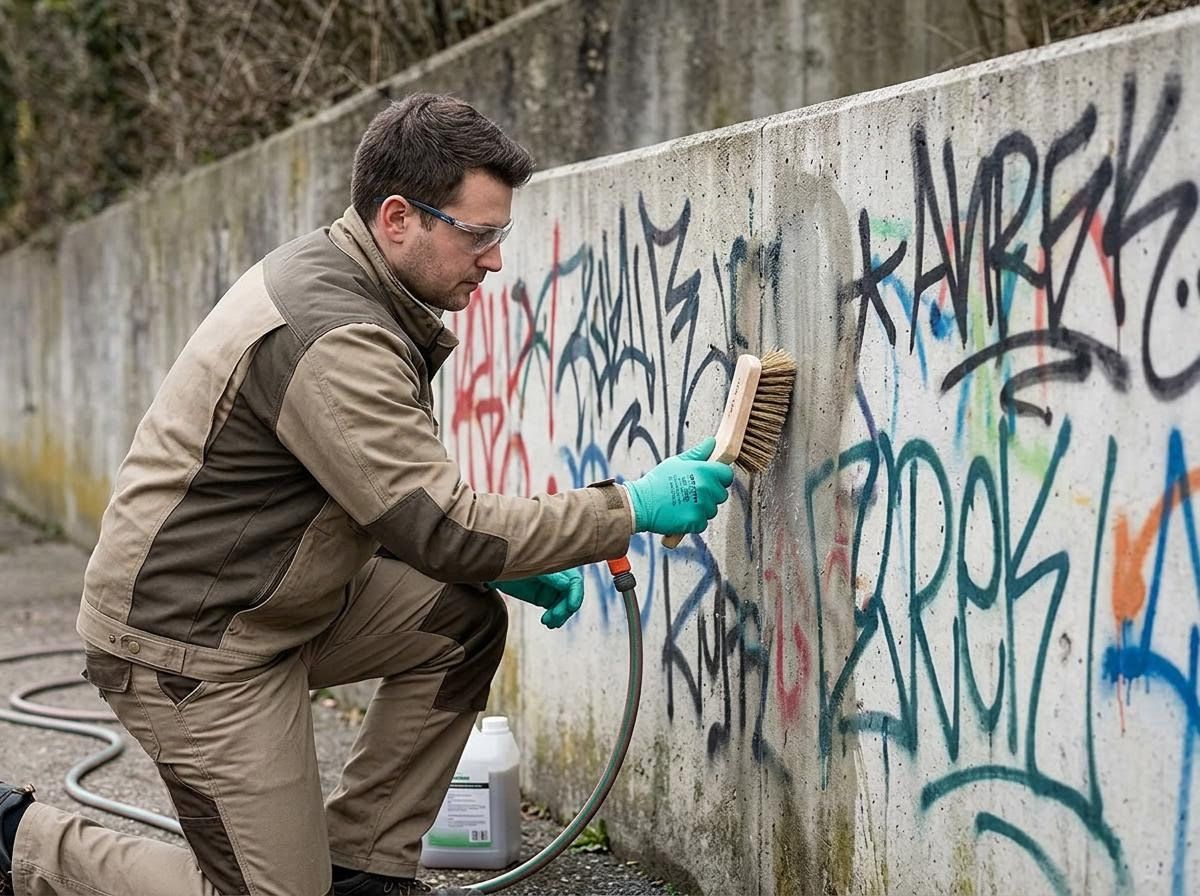
Once prepared, it's time for the main event. For how to remove graffiti effectively, apply the chosen best graffiti remover directly to the affected area. Follow the product's instructions carefully regarding dwell time, as this can vary. For stubborn stains or thicker layers of graffiti, you might need to allow the product to sit longer, ensuring it penetrates and breaks down the paint molecules. Use a stiff bristle brush, not wire, to gently agitate the solution into the graffiti. Work in small sections, always keeping the area wet with the remover to prevent the graffiti from drying back onto the surface. For surfaces like stone, ensure your stone graffiti remover is specifically formulated to be gentle yet effective.
Post-Removal Care and Future Prevention
After the graffiti has been thoroughly broken down and agitated, rinse the area completely with a power washer on a low setting or a garden hose. Ensure all traces of the remover and the dissolved graffiti are washed away. Proper disposal of runoff should also be considered according to local regulations. Once the concrete is clean and dry, consider applying a protective sealant. While not entirely graffiti-proof, a sealant can make future clean-ups significantly easier by creating a barrier that prevents paints and inks from deeply penetrating the concrete's pores.
Graffiti doesn't have to be a permanent fixture on your concrete surfaces. By understanding the material, preparing properly, and using the right heavy duty graffiti remover with correct techniques, you can effectively tackle even the toughest tags. Don't let unsightly vandalism diminish your property's appeal. Discover more about our specialized solutions designed to restore your surfaces with ease and efficiency.