Graffiti can be a persistent and unsightly problem for property owners, often leaving them wondering how to effectively restore their surfaces without causing further damage. While many resort to painting over the vandalism, a well-executed pressure washing strategy, especially when paired with the right solution, can be far more efficient and surface-friendly. This guide will walk you through the proper techniques to harness the power of your pressure washer to reclaim your property, ensuring a clean slate with the help of solutions like those offered by Taginator.
Pre-Treatment: The Unsung Hero of Graffiti Removal
Before you even think about firing up that pressure washer, proper preparation is paramount. Not all graffiti is created equal, nor are all surfaces. Understanding the type of paint, the age of the vandalism, and the material it's on will dictate your approach. For instance, removing spray paint from a delicate painted surface will require a different strategy than tackling a stubborn marker stain on brick. This initial assessment helps determine the best graffiti remover for your specific situation. Pre-treating the affected area with a high-quality, specialized graffiti remover is often the most critical step, allowing the solution to break down the graffiti’s bond with the surface before any mechanical action. This softens the paint, making the pressure washer's job significantly easier and reducing the need for excessive pressure that could damage your property.
Mastering the Pressure Washer: Technique and Safety First
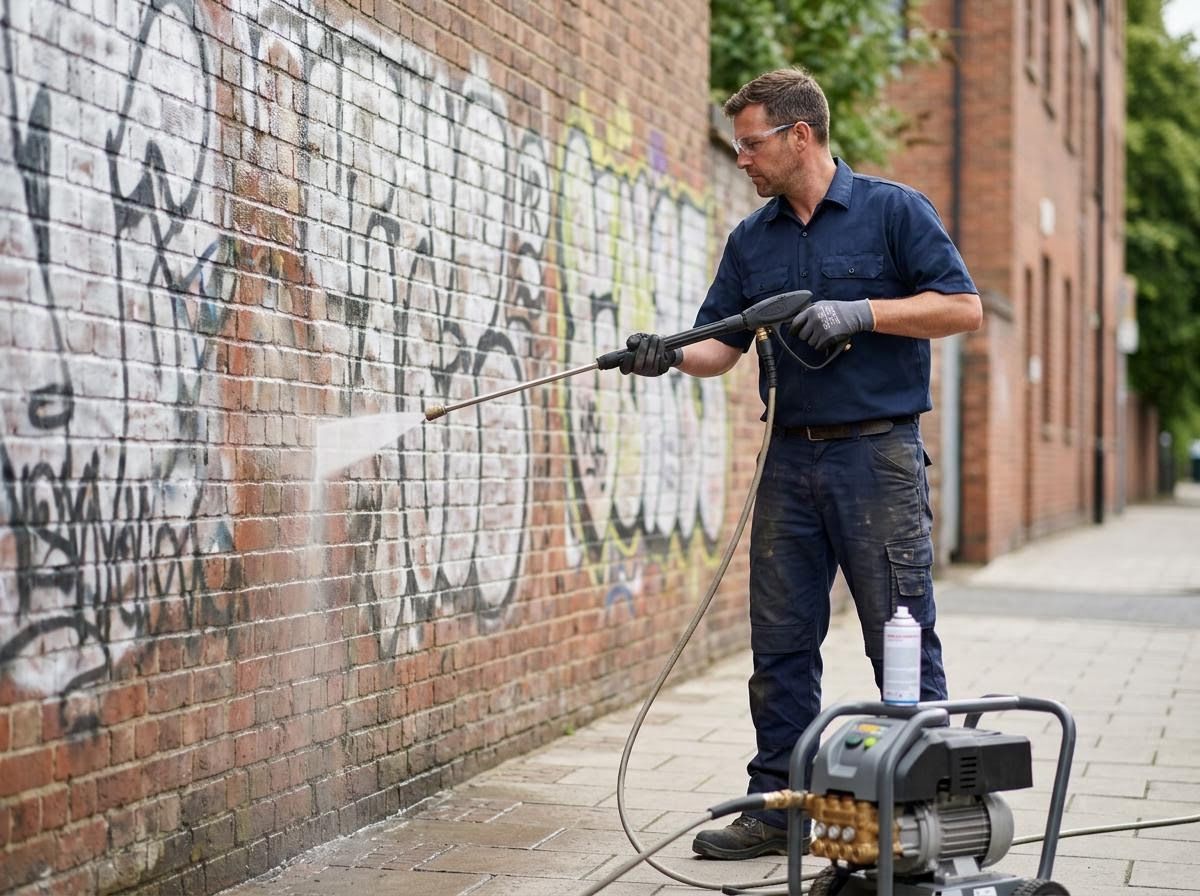
Using a pressure washer isn't just about blasting away at the problem; it requires a nuanced approach to be truly effective without causing harm. Always start with a lower pressure setting and a wider fan nozzle (e.g., 25 or 40 degrees), gradually increasing pressure and narrowing the spray pattern if necessary. Maintain a consistent distance from the surface, typically 6-12 inches, and use sweeping, overlapping motions to ensure even coverage. Never hold the nozzle in one spot for too long, as this can etch or damage the surface, especially on softer materials. For particularly tough or deeply embedded graffiti, a heavy duty graffiti remover applied generously and given adequate dwell time will significantly aid the process, allowing the pressure washer to rinse away the loosened paint rather than forcefully abrade it.
Tailoring Your Approach for Different Surfaces
Different materials react uniquely to pressure washing and cleaning agents, making a one-size-fits-all approach ineffective for how to remove graffiti. For porous surfaces like brick, concrete, or other masonry, a specialized masonry graffiti remover is essential. These surfaces absorb paint more deeply, so the chemical solution needs to penetrate effectively to lift the stain. Similarly, when dealing with stone, a gentle yet effective stone graffiti remover is crucial to prevent discoloration or erosion. Always test your cleaning solution and pressure washer settings on an inconspicuous area first to ensure compatibility and avoid irreparable damage. Patience and multiple, lighter applications are often more effective than aggressive, single attempts, especially on historical or delicate structures.
Reclaiming Your Property with Confidence
Graffiti doesn't have to be a permanent blight on your property. By combining the right pre-treatment, careful pressure washing techniques, and surface-specific knowledge, you can effectively eliminate unsightly vandalism and restore your property’s appearance. Understanding how to remove graffiti efficiently means knowing that a pressure washer is a powerful tool, but it's the intelligence behind its use—and the quality of the cleaning solutions—that truly delivers exceptional results without compromising the integrity of your surfaces. For those seeking reliable and effective solutions for graffiti clean-up, exploring the range of products at Taginator can provide the tools and expertise needed to tackle any challenge.